
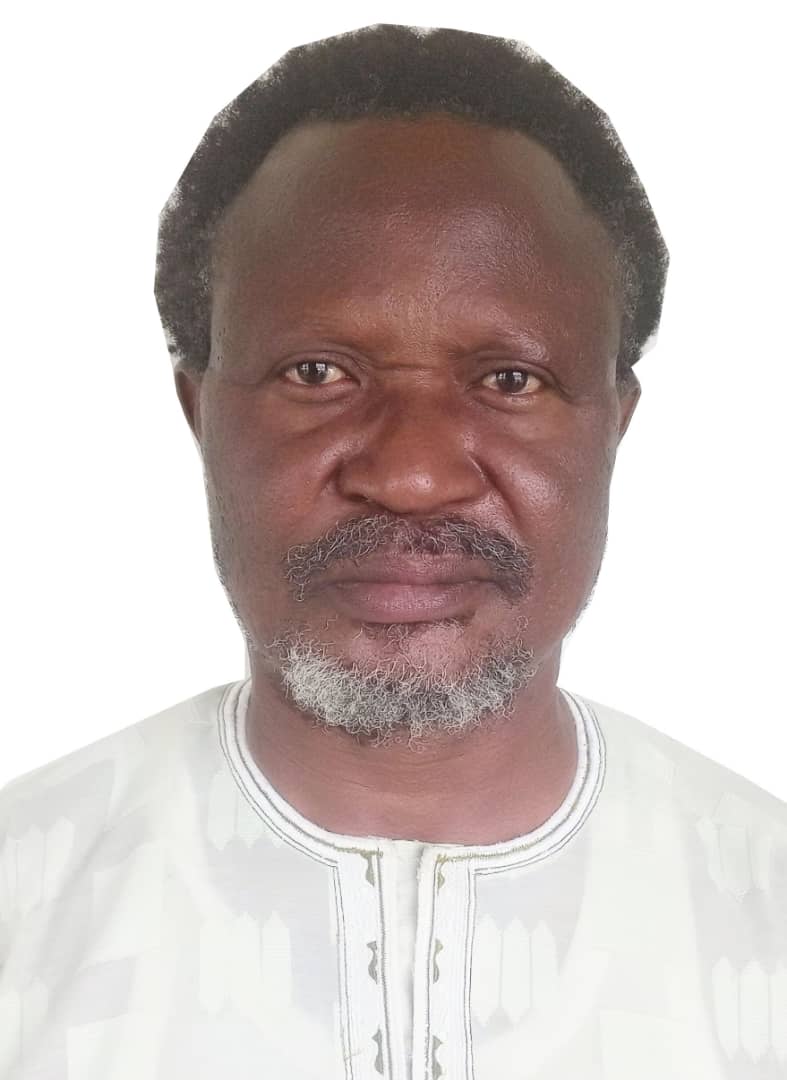
I WAS NOT BORN A WRITER, I BECAME ONE BY FIREBY HARUNA PENNI
A Writer of Fortune
In the quiet shadows of my early years, I never dreamed of wielding a pen as my sword. Writing was not a destiny that beconed with fanfare; it lurked qietly waiting, not announcing itself. So I had no suggestion to such destiny. I neither had the polished preparation nor innate talent for writing that so many claim as their birth right. My earliest intimacy was mediated not by books but by hum of voices and sound carried on waves. Books were rare, and imagination was disciplined by circumstance.
My closest encounter was with the spoken word through my father’s transistor radio. I reminded him of bulletin hour, brought the radio and tunned it faithfully to his preferred frequencies; BBC, VOA, and Radio Netherland’s Hausa services. So the world came to us through crackling frequencies, not pages. That radio ritual repeated daily, sharpened my ear for language long before I understood its power.Still, it was language that found me. I became, almost unconsciously, a community letter writer and reader—helping neighbours decipher official letters or compose replies.
Yet I never thought of this as writing. I regarded it as mere voluntary service.Everything changed in 1970 when I was ten. I stumbled upon a novel—Toads for Supper by Professor Chukwuemeka Ike. I found it tucked inside our apartment concrete wardrobe at the 29 Infantry Brigade Officers’ Mess GRA (now Government House) Abakaliki. I was to completely read the novel; on university staff politics. I got overwhelmed reading from cover to cover as though possessed.
That reading awakened something in me; I did not yet know the Muse. But that same book almost killed me. Hidden inside it was a small iron object. My curiosity betrayed me. I attempted to examine the device. It instantly detonated in smoke, shelling and fire. Panic swept through the barracks and the guard’s plantoon went into tumoil. Soldiers thought the war had returned. The object was later identified as an inactive grenade. I survived without injury by His Grace. From then, something irreversible had occurred: literature had announced itself in my life with fire. Providence was scripting its footnote.
My father was the Warrant Officer of the Guard Platoon. The Brigade Commander was Major Tunde Idiagbon; the Brigade Major, Sani Sami. Their names, like the incident itself, are etched permanently into my memory – not merely as military history, but as the backdrop to my literary awakening.
Needless to say; the incident made me read my way into literary consciousness. By the episode, my teenage years were marked instinctively roaming creativity. I haunted bookstands, bookshops, libraries, and roadside art galleries in Abakaliki. I devoured old recycled newspapers, magazines like Drum and Trust, romance novels by Mills & Boon, and thrillers by Dennis Robins, James Hadley Chase, and Tuesday Rampa. Reading became escape, then curiosity, then quiet discipline as it sneaked its way into me.
Formal Literature classes in secondary school widened the gate where I encountered the canon; Shakespeare and African masters who would later define my intellectual lineage – Achebe, Tutuola, Fagunwa, Ekwensi, Elechi Amadi, Buchi Emecheta, Flora Nwapa, Ngũgĩ wa Thiong’O, Ayi Kwei Armah, Mongo Beti, Fedinard Nyoyo and many others. At that beginning, I did not know northern creatives like Mohammed Sule, Mohammed Tukur Garba, Labo Yari, Nuhu Bamali, Zainab Alkali, Audu Ogbe, Abubakar Gimba, Yahaya Dangana. Their works would find me later, when I was ready. But not with Abubakar Imam, Shehu Shagari, Abubakar Tafawa Balewa.
But the other upcoming, not too young to write northerners – Helon Habila, Yushau Abdulhameed, Abubakar Adam Ibrahim, Ado Ahmed Gidan Dabino, Denja Abdullahi, Mohammed D’zukogi, Ibrahim Sheme, Yusuf Adamu, Khalid Imam, Sumaila Umaisha, Ismaila GarbaEzekiel Fajenyo. Their discovery came much later on when I was involved.
On poetry, unfortunately, it resisted me. It felt forced, ceremonial. Drama too seemed theatrical in the wrong way. I preferred narrative—twisted storytelling that ends in denouement. Ironically, I had performed poetry and drama as a child — once in 1973 at Four Seas Hall in Abakaliki, and later at Port Harcourt NTV in 1977. Yet I grew away from those forms as poetry is passed for lullaby, drama clownery. Perhaps, the prejudice emanates from youthfull rascality. Religion also shaped our choices. We were taught that those creative “nonsense” distracted the soul. Graphic arts, award plaque, (auto)biography were discouraged. Only useful crafts—architecture, pottery, knitting, Archery, equestrian, weaving, calligraphy, Quranic recitation—were encouraged. However, creativity survived, but cautiously.
I wrote my way through work. So my writing did not emerge from fiction but from schedule of duty: corporate and strategic communications. It all happened in 1979, when I became a press secretary to the Territorial Controler of P&T Niger State in Minna after leaving my accounts clerical post with the Niger State Cabinet Office.
My press duty was in addition to my membership of the Ghanian dominated Division Three P&T Aerostat FC. My task was to undertake content analysis of the newspapers everyday. That job sharpened my eye. I learn the anatomy of good reportage; precise language, and disciplined thought. I learned how news was shaped, how narratives were framed, how silence could be louder than print.
Later, at Zuru Local Government where I served as Information Officer, writing became unavoidable. I learned how it truly worked in public life. Press releases, features, special reports, were written on recurring events such as rainfall, agric shows, flood, farm harvest, festivals, funerals, bush fires, school ceremony—nothing was really new. Everything had precedent. I patronized archives, benchmark refined formats, and imitated established styles until imitation matured into core competence; and clarity became habit. Then writing became a method to connect, not mystery; it discilined my prose.
By the mid-1980s, I was freelancing for Niger State Newsline Newspapers. With time, writing became less accidental and more deliberate. When I moved to NIPOST Lafiaji-Lagos, I wrote columns on relationships and social behavior, drawing from communication theories, Zodiac symbolism and public relations ideas. My professional training—in marketing communications, journalism, public relations and public information — deepened this craft.In the OSGF, writing became institutionalised propaganda, rejoinders, features, rebuttal, and speeches. Further postgraduate training from masters to doctorate grounded me in scholarly methodology. I came to understand that most genres are learnable; they are not mystical gifts but procedures.
I dreamed not of authorship when I write, because writing was the language of responsibility.The turning point came unexpectedly by courage, to become an author. I was asked—mistakenly—to edit manuscripts. First by a struggling novelist. Then by Dr. Davidson Chuka Aniakor, a scholar who trusted me without knowing me. Editing taught me confidence. It revealed again that writing was not magic, but method. Editing taught me structure. Teaching taught me humility. Friendship taught me courage.Most people I think mistaken my literacy for mastery; affording me to learn by doing.
My first substantial authorship emerged, by expanding a features into full length book. That conviced me: I could learn this craft. Encouraged. I discovered that writing could interpret everyday life and give it structure. I was no longer only reacting. I was creating; ideas are never born in isolation, no author is a philosophical virgin, and writing is less about originality than honest synthesis.
Finding Minna ANAOn June 1, 1994, Ezekiel Fajenyo a Minna based Newsline Newspaper writer interviewed me on my new book designed to foster family system through public relations ideas. At the end, the journalist asked if I belonged to the Association of Nigerian Authors (ANA). Coming from a corporate background in Lagos, I did not even know what it was.
He explained, and promised to connect me with Mohammed Baba D’zukogi, the state secretary. That invitation altered my tragectory. ANA introduced me to writers as community — not as solitary figures but as colleagues. Through ANA I encountered a city – Minna, that had quietly nurtured giants: Abubakar Gimba, Yahaya Dangana, Baba Dzukogi, Ezekiel Fajenyo, and many others. Although, I was born in Raiways Quarters in Minna, unknown to me, the town had acquired the status of a literary city all along.
Nonetheless, by the time I joined ANA, I had been writing for years – without permission, without tilte, without certaintiy. But with ANA, I became part of a lager national struggle – between writers and power, creativity and the state, memory and repression.
I joined ANA unaware of its fraught history with military governments – the execution of Mamman Jiya Vatsa, the hanging of Ken Saro-Wiwa, the harassment of its leaders, the confiscation of its properties at Mpape and Area 1 Garki. I would later witness firsthand the delicate diplomacy required to reintegrate literature into the national conscience.
Founding the Federal Capital Territory (FCT) chapter of ANA was not a rebellion; it was inevitability. Abuja had become Nigeria’s political nerve centre. Writers followed power, and ANA had to follow its writers. So through persistence, negotiation, and strategic restraint, we carved space for literature in the capital – hosting literary conventions, rebuilding trust, and ensuring that ANA survived not as a protest movement alone, but as a professional body dedicated to writing.
Founding FCT ANA As Abuja expanded with the relocation of MDAs from Lagos, writers followed and congregated without structure. ANA too—slowly, reluctantly. Someone had to organize it. That someone became me. Against skepticism, bureaucracy, and political tension, and misgivings from Minna we forged, I declared the FCT chapter of ANA – driven by numbers, geography, and inevitability. Luckily for us, the pioneer members (Late Dr Davidson C. Aniakor, Late Dr Sir Frank Ogbeche, Late Aliyu Ibraahim, SS Na’inna and myself) were all civil servants in the OSGF except Dr Charles Edet. Before then, I had been recruiting Abuja-based authors into Minna ANA until the demand for autonomy became irresistible.
We navigated military suspicion, recruited quietly, negotiated spaces for our programmes – ANA FCT survived, even flourished. Writers, broadcasters, acadeics gathered. My OSGF office in Room 50, Federal Secretaria, Phase 1 – became both FCT and national ANA secretariat in Abuja. This symbolic occupation mattered. Literature had entered the bureaucracy.
The turning point came when at the 1996 ANA national convention in Kaduna, we secured recocognition and eventually hosting rights for the 1997 international convention and AGM in Abuja. This was historic: the first major ANA return to Abuja after prosecution.
To further consolidate peace, reassure and pave way for the 1997 ANA convention, I facilitated a pivotal meeting between ANA president Odia Ofeimun and Dr Bukar Usman, DG Special Services Office in the presence of Saleh Salisu Nainna, Professor Mabel Evwierhoma, Dave Delson Kaze and myself. Come the 1997 AGM, it was successful devoid of rancour. Abubakar Gimba emerged President rejecting the junta’s candidate and promise of sponsorship. Dr Wale rose in stature as Secretary General. ANA stabilisef, shedding insurgent posture for institutional strength. Writers and writing became synonymous with Abuja. Years later (2025) it was crowned as city of literature by UNESCO.Then onwards, I led FCT ANA without inheritance. There was no structure on the ground.
I created one. So, the ANA FCT chapter did not emerge from abundance. It was born into scarcity—of funds, of organizational framework, and of precedent. When I assumed responsibility for its affairs, there was no constitutionally elected executive, no permanent venue, and no administrative culture to inherit. What existed was little more than intention and the fragile enthusiasm of writers scattered across Abuja, many of whom had come from established chapters elsewhere and assumed continuity but none existed.
The earliest EXCO arrangements were provisional—appointments made out of necessity rather than mandate. Their purpose was survival, not governance. Consequently, leadership was exercised in uncertainty. I learned by doing, often correcting errors midstream, bearing the burden of decision-making without the comfort of institutional backing or strong followership.This vacuum bred misunderstanding.
Those who joined later often assumed that the chapter’s formative struggles were exaggerations, or worse, incompetence. They carried stories that cost nothing to tell, second-hand narratives that ignored the cost of pioneering: the meetings financed personally, the letters written without letterheads, the programmes conceived without budgets. Yet history rarely kindly records beginnings, of those who bore the burden of pioneering.
Relief came gradually with the arrival of Law Mefor in 1997, Denja Abdullahi in 1998, and Messrs Mike Ameh, Abubakar Inaboya in 2000. Their presence gave me renewed strenght, brought balance and manpower. Denja, in particular, indefatigable and selfless, became my man Firday. He distinguished himself through quiet diligence and uncommon loyalty.
I entrusted Denja with administration and programme coordination, not out of abdication, but out of strategic mentoring. I engage Ameh and Inaboya effectively for trouble shooting – membership drive, book launches, awards nomination, fundraising appeals etc, while Law Mefor was my alter-ago, kind of special adviser and brain box. He shared my office and was with me until close of the day, and after socials. With them around, the chapter began, at last, to breathe fresh air.
The First Democratic Experiment, Conducting ANA FCT inaugural election was beginnings without inheritance. There was neither structure nor system. No institutional memory, no fuctional framework – only goodwill, uncertainty, and urgent need to build. With limited administrative experience and weak followership, I faced the inenviable task of erecting an organisation from bare ground.
One of the institutional and fuctional arrangement was to plan and conduct election for the chapter’s Executive Council. Though it was both symbolic and risky. We were soon to witness collaboration, crisis, and implosion. Yes, power had always been transitional, tentative. But legitimacy demanded democracy. No sketing it. With limited resources, we could not afford premium venue. We chose modest Lebanise Halal Restaurant at the Women Development Centre, Abuja. The modesty of the location reflected our reality. Apart from pro bona British Council, French Cultural Centre, and occasionally the Community Hall at the Cultural Centre, Abuja, we had no access to fee-paying spaces.
The 2001 AGM and conference therefore marked a watershed. The lecture, “Recreation and Abuja City,” delivered by Mrs. Omotayo Omotosho, Director-General of the Nigerian Tourism Commission, lent gravitas to an otherwise humble gathering.
It was also during this period that Gladys Williams Russell emerged as a dominant figure. Poet, administrator, and former Director of Press to successive Ministers of Information and Culture, she had long been sympathetic to the Abuja chapter. She had represented the Ministry at the 1999 ANA Convention in Ilesha, Osun State. Her loss in a national EXCO contest created both sympathy and political opportunity.
On returning to Abuja, the chapter—led by me—resolved to encourage her to contest the FCT chairmanship. It was an act of goodwill, partly political, partly compensatory. She was elected unopposed. For the first time, ANA FCT had an elected executive.
No sooner had the chapter settled into democratic legitimacy than it faced its first institutional test. Dr. Sylvester Williams, Director-General of the Nigerian Copyright Commission (NCC), proposed a collaborative national sensitisation programme on plagiarism and copyright violations in tertiary institutions. EXCO approved the partnership unanimously. Law Mefor and I drafted the concept note, which NCC endorsed. And called for an inaugural meeting where Committees were formed.
I was appointed Project Secretary-General and chair mobilization committee to raise LOC for the inaugural programme at university of Abuja in Gwagwalada. There were no kickoff funds. At the University, I enlisted respected academics, shuttled repeatedly at my own expense, and produced measurable outcomes. When I submitted a progress report and applied for reimbursement of out-of-pocket expenses, the NCC DG approved a modest sum—barely symbolic, yet affirming. That reimbursement triggered the chapter’s first major implosion.
A faction—later known as the “kitchen cabinet”—questioned my authority, misrepresented facts, and weaponised ignorance. They accused me of collecting ANA funds without authorisation, refusing to acknowledge that the money came from NCC and belonged to my subcommittee members who spent out of their pockets.
Their resistance was not procedural—it was political. They issued queries, escalated matters to our patron without disclosure to us, and published a spurious sack notice in newspapers. I refused public engagement. The programme succeeded without them. NCC affirmed confidence in me.
The chapter collapsed under the weight of internal sabotage. A physical altercation during a meeting sealed the breakdown. I convened an emergency meeting, where a vote of no confidence was passed. Yet I refused to serve the letter. The chair had been misled, not malicious. We chose restraint over humiliation. Hence the chapter went into strategic dormancy, awaiting tenure lapse.
The Second Election By 2003, ANA FCT was ready to reconstitute. The AGM was held at the British Council, Maitama. The lecture, “Positioning the Writer in Democracy,” delivered by Prof. Iyorwuese Hagher, symbolised renewal. The former dissidents were absent—politically isolated and organisationally irrelevant. Tired of sabotage, I resolved to lead openly rather than behind the curtain. I was returned unopposed.
This marked a shift from symbolic leadership to direct authority. There was consolidation and control. Members identified the chapter with my leadership, regardless of titles. We funded activities through book launches, corporate goodwill, and personal sacrifice. The chapter stabilised. Publishing increased. Membership grew. National integration strengthened.
The Third Election By 2005, attention shifted to national politics. Our FCT member Dr. Emman Shehu emerged as a presidential aspirant. The FCT chapter endorsed him. Manifestoes Day at the French Cultural Centre became a screening platform. But he lost in Kano. Following President Wale Okediran’s victory, he directed for nationwide elections, I prepared to step down, having completed my statutory tenure. We organised the 2006 AGM at Zuma Hall. Funding was precarious. Law Mefor borrowed money. I secured the venue on credit.
Dr. Shehu had earlier declined nomination for chairmanship. Yet on Election Day, he appeared unannounced, registered discreetly, and declared candidacy midstream. Non-members voted. The NEC representative left abruptly. Objections were overruled, by Inaboya the electoral umpire.
Mefor and I were disenfranchised. Shehu was declared winner. Debts remained unpaid. Manipulators celebrated. Resolution without Justice. ANA NEC initially cancelled the election. Shehu resisted. A reconciliation committee upheld the result on grounds of expediency, not justice. Mefor was urged to abandon legal action. Peace was prioritized over process.
I complied with reconciliation terms and withdrew completely. No formal handover occurred. No briefing was requested. Documents remain in my custody. I have resolved to deposit them with the Association’s national archive and library. Shehu’s tenure collapsed shortly thereafter amid allegations by members. He exited ANA entirely, formed his own literary group. ANA National Conventions & AGMMy life on the literary road started with my first ANA National Convention in 1996 in Kaduna, held between November 7 and 10, straddling the British Council and Arewa House. It was also the first major outing for the FCT chapter, still fragile and finding its balance.
We attended with modest confidence, buoyed by sponsorship from Gidado Idris, then Secretary to the Government of the Federation—an uncommon patron of the arts. The Federal Military Government, for its part, seemed keen to signal that it bore no quarrel with Nigerian writers as a body, except where the law was breached.Four of us made the trip: Aliyu Ibrahim, Salisu Na’inna, Frank Ogbechie, and myself. We lodged at Ahmadu Bello Stadium Hotel Kaduna.
That year’s Guest Writer was Biyi Bandele, then UK-based, while Prof. Harry Garuba was was still with us. A communiqué was issued in solidarity with the suspended and sacked UNILORIN lecturers who were ANA members, a reminder that literature and conscience were still intertwined.The Abuja 1997 convention which witnessed power, politics, poise, was historic. Held at the newly completed Women Development Centre, it coincided with an election year and marked ANA’s return to the nascent national capital.
Despite overt pressure from the military establishment to install a preferred candidate, Malam Abubakar Gimba emerged as president, succeeding Odia Ofeimun, who handed over with dignity. The feared disruption never came. For ANA, this was a quiet victory of restraint over intimidation.
The 1998 Convention in Awka, hosted at Ikenga Hotel, tested our endurance. Sponsorship arrived late, long after hotels were fully booked. We spent our first night squatting in the lobby, waiting for rooms to free up the following morning.The AGM stretched deep into the night, as usual—committee reports, awards, long speeches—yet no elections. We were tired, but bonded by inconvenience, which is often ANA’s true adhesive.
At the 1999 Convention in Ilesha, held at Concord Hotel and Farm Resort, privilege showed itself early: executive members and early arrivals claimed the Resort rooms. The Abuja delegation—Frank Ogbechie, Denja Abdullahi, Law Mefor, Zulaikha Abdullahi, and myself—were lodged elsewhere, at the ancient city of red zinc.I presented a report on the abandoned Mamman Vatsa Writers’ Village in Mpape, noting that its only structure had been overtaken by skunks, urchins, and hemp smokers.
Dr. Reuben Abati dryly responded that at least it was meeting some socio-economic need, since ANA lacked funds even for a fence.Behind the scenes, politics simmered. South-East writers met secretly, flouting the Igbo presidency consensus—only for their resolutions to be published the next morning by a Champion Newspaper’s literary journalist, a fellow Ibo who was in attendance. That disclosure dissolved their intrigue before it matured.
It was also in Ilesha that I first met Dr Ibrahim Sheme, a meeting that later led to my engagement as a researcher on General Musa Yar’Adua’s biography. As pointed out earlier, it was also here that Mrs Gladys Russell first showed interest in ANA leadership by contesting the presidency. The 2000 Convention in Jos was memorable for all the wrong—and right—reasons. Accommodation fell through on arrival.
I found myself paired with Dr. Austin Apuda, spending a sleepless night in a brothel, waiting for dawn. Later, we were moved to Plateau Hotelin the GRA, crammed into shared rooms. It was here in Jos I first encountered Emman Usman Shehu, and where Pita Okute pitched his travel-writing vision to an unreceptive audience—an idea that would later be adapted successfully by Denja Abdullahi. Here too Martins Uka, author of cultism novel, revealed his stuff. He asked me to accompany him to Unijos student union leaders.
Port Harcourt convention in 2002 was home coming. I attended my primary and secondary schools and played football in the 70s in Port Hacourt. So the 2002 Convention in Port Harcourt remains vivid in my memory. The late journey itself—through Enugu at night, dodging criminal road traps—revealed more than roads. Our companion’s calm navigation exposed the unspoken intelligence role behind his Foreign Affairs posting.
We enjoyed Elechi Amadi’s play, ‘The Calabar Woman’, and witnessed fierce elections. Against expectations, Prof. Olu Obafemi defeated the home-state favourite, Elechi Amadi.I persuaded Denja Abdullahi to contest for Assistant Secretary-General. Reluctant but keen, I goaded him to victory. Outside the Hotel Presidential, a fleeing Okada (motorcycle) rider snatched Sonnie Nwosu’s conference bag, mistaking it for cash. FCT ANA survived the loss; Nwosu survived the embarrassment.
Makurdi 2003 ANA National Conventions & AGM unfolded at Audu Ogbeh Cultural Centre, marked by motor-park meals, cultural performances, and long nuctural conversations. Lokoja 2004 ANA National Conventions & AGM followed the following year — hosted at Confluence Hotel. The heat was relentless, but history compensated: Mount Patti (Lord Lugard’s resting spot), colonial relics (first admin office, primary school), deposed local kings’ cemetery and fallen Wrold Wars memory sites stitched literature into geography.
I became an unwilling newspaper vendor for Prof Nduka Otieno, lugging bundles ANA Review copies from its Abuja printers across state lines without transport. That, too, is service.
By Kano 2005, ANA National Conventions & AGM politics had matured — perhaps too much. Denja Abdullahi’s cross-carpeting shocked the Abuja delegation but proved decisive. His sposor, Dr. Wale Okediran won the presidency; he became Secretary-General.
We were hosted lavishly by the Kano State Government through the Prof Yusfu Adamu-led ANA chapter, and old professional bonds resurfaced—teachers turned ministers (Gov. Ibrahim Shekari, Prof Jerry Agada), writers turned power brokers.
From 2006 onward, my attendance became irregular. Civil service postings, especially to Budget Monitoring and Evaluation, placed me perpetually on inspection tours at year’s end of federal budget cycle — precisely when ANA conventions held.
Kaduna 2016 ANA National Conventions & AGM. I returned this year partly to witness Denja Abdullahi elected ANA President but resumed fully in 2020 even though at the pherphrial level as the cost of full participation has become expensive. And there is also the fear of members from professional bodies playing regulatory role for government introducing practices inimical to ANA as a voluntary organization.
The campaign was fierce, expensive, and exhausting—more so than any before it. I voted for Denja, against my recruiter in Minna (Mohammed B. D’zukogi) not out of factional loyalty, but mentorship. I too was his recruiter. He had become what I could not be at that moment.
In 2022, I was nominated and conferred with ANA Fellowship—a gesture that felt less like honour and more like closure. I stood among academics, administrators, playwrights, poets, critics—many from backgrounds unlike mine—yet bound by service to literature. The MVWV, Mpape conventions have become, for me, a quiet calendar of seasons—of youth and age, of ambition and retreat, of power won and power relinquished. Each October, between the 31st Octoberand the 2nd November, the Association of Nigerian Authors gathered at what would eventually become its permanent home, and each year I arrived bearing less urgency but more memory.
2020 was the year I had just retired. Retirement does strange things to a man—it loosens his steps but sharpens his gaze. For the first time in years, I was free again, free to observe, free to linger, free to “taste action” without the burden of office. Denja Abdullahi dragged me—almost literally—to Mpape, determined that I must vote for his anointed successor. Having himself inherited the presidency from the vice-presidency, he wished to complete the circle by handing over to his own vice president, Dr Camillus Ukah. There was also the quiet but persistent yearning for an Igbo presidency in ANA, a desire long suppressed but never extinguished.
I attended that convention fully and noticed something unsettling: many of the old faces were missing. Later I understood why. The Makurdi election that ushered in Ukah’s first term had fractured the Association. What followed was not merely disagreement but a fratricidal war of attrition—factions, accusations, court cases, and bitterness that refused to heal.
At the centre of that early storm stood D’zukogi—a gentleman, a malam, restrained and dignified. He never openly joined the agitators, but his sympathisers did. They rejected the Makurdi election as irregular and organised an alternative convention in Enugu. For the first time in ANA’s history, the Association stood openly divided. Ahmed Maiwada was said to have emerged victorious from that parallel process, but my knowledge of the details came only through sporadic media outbursts. I had registered Maiwada by proxy as an FCT ANA member, just as I had done for Shehu, long before I ever met him. When I finally did, I found both men to be educated, sophisticated Hausa Christians, widely admired by the youth and progressive blocs across the country.
I found myself, almost by accident, among younger members who neither knew me nor my history. Yet I stood before them like a moving archive, a living memory. To me, they were schoolchildren—thirty years ago, many of them had been infants. But time teaches humility. The young must grow. The old must learn when to step aside. Every generation reaches its apotheosis, and when it does, it can no longer swing. I finally understood why Odia Ofeimun, once the self-appointed custodian of ANA, chose to withdraw completely. Even guardians must eventually release the gate.
That year also gave me moments of warmth. I met again my Kaduna-based friend from Ghana, Prince John Sarpong. Over drinks and laughter, we reminisced about the golden days of ANA—days unmarred by self-seeking ambition and cut-throat political scoundrelism.
2021 came quietly. Non-election conventions rarely stir passion, and this one was no exception. Attendance was thin, enthusiasm thinner. I began to question whether concentrating all conventions permanently in Mpape was wise. Rotating them across states once helped us know the country, build bridges, and engage state governments and public-spirited individuals. Now that we were self-sufficient, we risked becoming conceited. Still, the harsh realities of transportation costs accommodation, and feeding made decentralisation difficult.
2022 arrived with an unexpected honour. Denja called to inform me of my nomination for ANA Fellowship. I was asked to submit my citation and acceptance letter. When I searched online, I saw familiar names—Professors Yusuf Adamu, Amanze Akpuda, Nduka Otiono, Dul Johnson, Yahaya Dangana—men who had paid their dues in sustaining ANA across their states. Most were academics, scholars content with community service rather than political dominance. ANA, in truth, belonged to them.
I stood out. Only Yahaya Dangana and I came from different professional backgrounds. Yet the Fellowship was never about literary prizes alone. It was recognition of service. The investiture, conducted in the presence of ANA’s Advisory Council—Okediran, Obafemi, Osofisan, Ezeigbo—was a moment of quiet fulfilment. Greg Odigie, my perennial companion at moments of honour, stood by me again.
That convention also deepened my intellectual world. I finally met Prof Udenta Udenta, whom I had known only through reputation and books. His work on Ideological Sanction and Social Action in African Literature had shaped my thinking profoundly. From him, I learned the architecture of the “positive hero”—a figure who resists slavery, imperialism, cultural decay, and colonial domination. Udenta is a formidable mind, irresistible in scholarship, fearless in conceptual inversion.
2023 returned us to the furnace of elections. Usman Akanbi reached out during his campaign. I warned him gently: the road to hell is often paved with gold. He was a gentle soul, a banker turned academic, son of an ICPC pioneer. Unknown to many, he had the backing of the outgoing president. The process, though better organised than in the past, was not without manipulation. I failed to vote—caught in bureaucratic delay. By the time my issue was resolved, I had already left. I committed the outcome to God.
Later, Denja sought my counsel when litigation loomed. I advised restraint. ANA did not need another court battle. He listened.
2024 was subdued. Inflation had crushed enthusiasm. Age had begun to speak louder in my body. Night journeys between Abuja and Suleja were no longer feasible. Pension life stripped away swagger but gifted me something else: stillness. In stillness, I read more. I wrote better.
Yet the convention reunited me with old comrades—Sonnie Nwosu, Denja, faces from decades past. I reconnected with Prof Nduka Otiono, now based in Canada, once our Secretary General. We laughed about a book vendor from Lokoja, a memory preserved like amber. Akanbi commissioned the ANA Writers’ Residency that year, amidst pomp and royal presence. History, even when fragile, was still being made.
2025 restored dignity. I attended by special invitation of President Akanbi, who arranged accommodation for me. The highlight was the opening of the Prof Wole Soyinka Apartment Block, with Soyinka himself present. Literature stood tall again. That year also birthed the Northern Writers Forum—an initiative to reclaim Arewa literature from obscurity, to close gaps in publishing and education. I nominated coordinators. The work continued.And so, each November at Mpape, I do not merely attend conventions. I attend my own memory.
Looking back, my scorecard as FCT ANA Chairman is not in titles but in structures built, authors nurtured, bridges formed, conflicts resolved, literature documented, and lives quietly touched.
And beyond administration, there is No Going Back—my novel, my cultural testament. It is my attempt to restore indigenous memory, to resist historical erasure, to let fiction speak where official history falters. The novel stands not merely as art but as cultural document, an archive of the Lelna people, their martial ethos, their resistance, their humanity. History may argue with the novel, but the novel has learned how to argue back.
Retirement in 2020 from the Nigerian civil service restored my freedom. Although, not financially buoyant I attended conventions again, witnessing ANA’s internal fractures and generational shifts. Younger members now filled halls where elders once dominated. I became, unexpectedly, a living archive.
Retirement and Renewal In conlusion, I assert I was not born a writer, I was forged one by fire – by accident, by service, by stubborn learning. Fortune placed a book in my hands, danger at my feet, and responsibility on my shoulders. That grenade accident marked an irreversible shift-literature branded itself upon my soul with the searing heat of fire.
ANA did not make me a writer; it gave my writing a home. And so, this memoir is not merely my story. It is the story of Nigerian writing – surving fire, silence, politics, and doubt – still insisting on being told. It is clear that I only became a writer by service, error, accident, persistence, and grace. I learned that writing is not always inspiration—it is often endurance. That creativity can survive institutions. That community matters. That even under suspicion, art persists. Most of all, I learned that no life is without narrative. Some of us are simply called to record it.ANA taught me that literary institutions are mirrors of society: generous, flawed, ambitious, divided, hopeful.
I arrived not as a novelist, but as a facilitator. I leave not as a politician, but as a witness. And perhaps that is enough.
Even when I left, history has moved on. New members are everywhere unaware of the foundations laid before them. I became a footnote — present only in memory. Yet institutions, like literature, are sustained not only by victors but by those who endured beginnings.Haruna Penni is an Abuja-based writer and founding father of the FCT Association of Nigerian Authors. He is a Fellow of the Association and on 08034299585.
This work is an excerpt from his ‘My Memoir in ANA’, part of an ongoing autobiography.